Expert Shopify Development Company in Kozhikode
Malabar's food trade does not need a prettier product grid. It needs batch data, expiry rules, hamper maths that survives Onam, and a dispatch path that respects shelf life.
- check_circle
Manufacture and best-before dates modelled per lot, not per product
- check_circle
Hampers built from components so every tin inside them moves on sale
- check_circle
Handling classes that pick the courier instead of a packer guessing
- check_circle
Export-ready ingredient, weight and origin data for Gulf consignments
Need continuing ownership rather than a delivery? See our Shopify partner engagement in Kozhikode.

Batch-Level Stock
Expiry held on the lot, not the listing
Component Boxes
A hamper draws down everything inside it
Shelf-Life Rules
Dispatch blocked before the date runs out
Structured Labels
Licence, allergen and weight data from fields
The engineering Malabar food brands actually come to us for
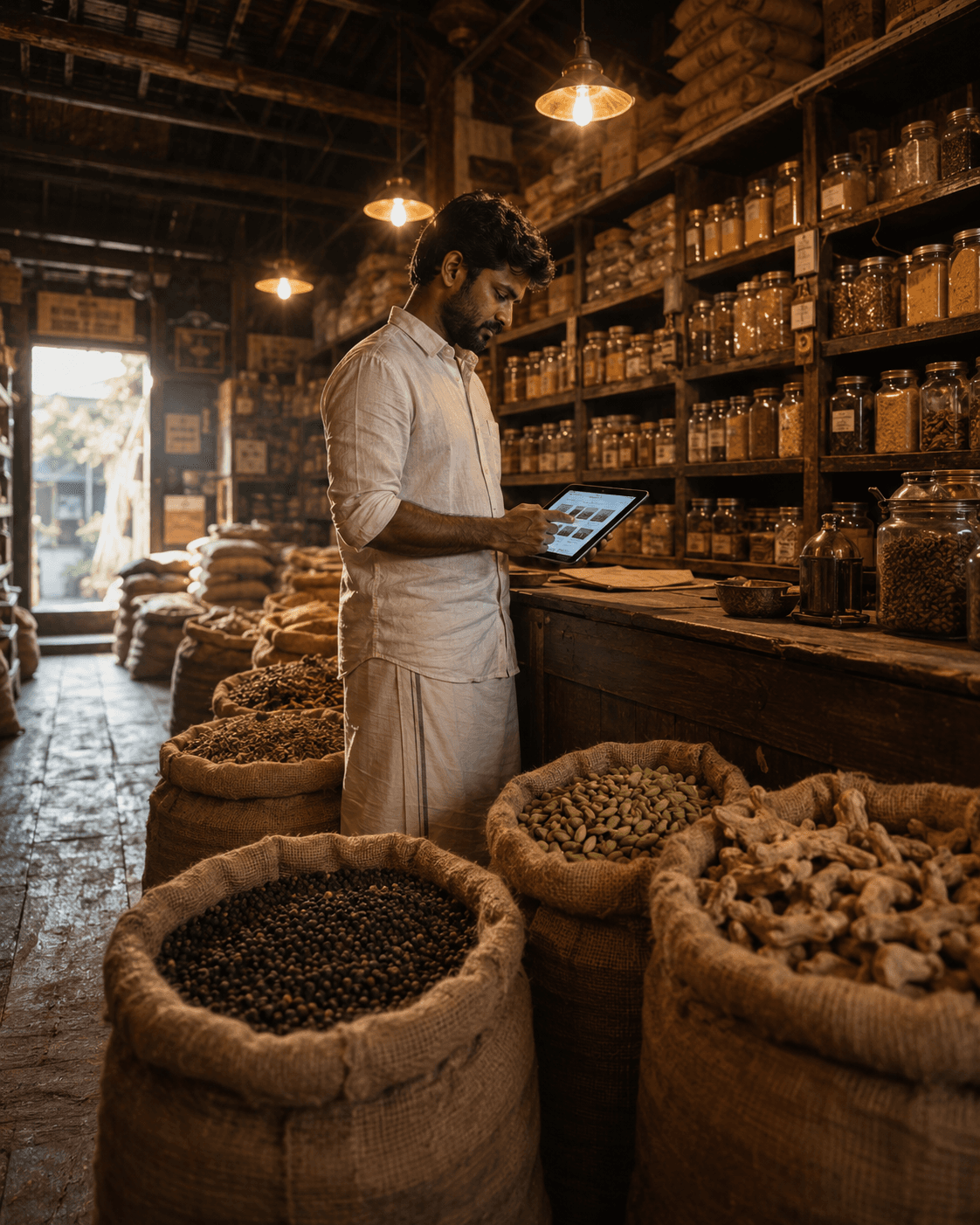
Between the sweet houses off SM Street, the spice traders, the snack manufacturers and the export-facing packers, almost every brief we take here reduces to the same difficulty — the product changes with every batch, and a standard ecommerce catalogue has nowhere to put that.
Batch, Lot & Expiry Modelling
A tin packed on Tuesday and one packed in March are not the same unit of stock, and a catalogue that pretends otherwise eventually ships the wrong one.
- chevron_right
Manufacture and best-before dates held per lot rather than per product
- chevron_right
Oldest saleable stock picked first, enforced by the system not the packer
- chevron_right
Minimum-remaining-life rules that block a dispatch instead of risking it
- chevron_right
Lot identifiers carried onto the invoice and any recall list
Hamper & Assortment Engines
Onam and Ramadan boxes are the biggest revenue events of the year here, and they are where inventory maths usually breaks.
- chevron_right
Boxes modelled as components so every tin inside them moves on sale
- chevron_right
Availability computed from the scarcest item rather than typed in
- chevron_right
Build-your-own flows with slot rules, weight caps and price bands
- chevron_right
Packaging, ribbon and insert cards counted as consumable stock
Shelf-Life-Aware Fulfilment
Wet halwa, fried snacks and vacuum-packed fish do not travel the same way, and the store should know that before it accepts the order.
- chevron_right
Handling class held on the product and read by the shipping logic
- chevron_right
Cut-offs tied to your kitchen and packing schedule, not a fixed clock
- chevron_right
Delivery estimates checked against remaining shelf life at checkout
- chevron_right
Unreachable pin codes refused at the cart rather than refunded later
Gulf & Outstation Consignments
Much of what leaves this district is bought by someone who moved away, and food crossing a border carries paperwork ordinary parcels never see.
- chevron_right
Ingredient, net weight and origin data structured for declarations
- chevron_right
Restricted lines suppressed by destination instead of failing in transit
- chevron_right
Shipping and duty expectations shown before payment, not after
- chevron_right
Multi-currency presentment that still reconciles in your books
Kitchen & Production Capacity
Made-fresh output is a hard daily limit, and selling past it is how a strong festival week turns into refunds.
- chevron_right
Daily and weekly production caps expressed as real inventory limits
- chevron_right
Pre-order and made-to-order lines with honest despatch dates
- chevron_right
Batch and production data arriving without manual re-entry
- chevron_right
Festival capacity planned as a schedule rather than a hope

The fields that decide whether a parcel arrives edible
Most food stores we inherit in this district hold all of this in a description box, a spreadsheet and a packer's memory. Moving it into structured data is unglamorous work, and it is what stops the store making promises the kitchen cannot keep.
Expiry is data, not a sticker
Once best-before lives in the record the store reasons about, availability, picking order and dispatch eligibility all follow from it automatically instead of from someone checking a shelf.
Net, drained and gross kept apart
A five-hundred-gram pack is not a five-hundred-gram consignment. Holding the three weights separately is what makes courier pricing, declarations and label compliance come out right.
Ingredient and allergen panels from fields
Typed into descriptions they drift between products and languages. Held as structured data they render identically everywhere and get corrected in one place.
Handling class on the product
Whether an item needs speed, insulation or nothing special is a property of that item. The shipping rules should read it rather than infer it from a collection name.
Licence and label data tied to the lot
FSSAI number, packer details, batch code and manufacture date belong to the batch, and should reach the invoice and the carton label from a single source.
Reorder behaviour designed in
Food is bought again or it is not bought at all. Reorder from history, saved assortments and a subscription path are structural decisions, not apps bolted on afterwards.
Building the gift box without breaking the stock ledger
Onam, Ramadan and the wedding season are when a Kozhikode food brand makes its year, and they are also when the hamper quietly oversells because the box was modelled as a product rather than as the things inside it. This is the fix.
- check_circle
Every box modelled as its components so stock moves when it sells
- check_circle
Availability derived from the scarcest item rather than set by hand
- check_circle
Slot rules — three sweets and two savouries — enforced at the cart
- check_circle
Weight and price ceilings applied while the box is built, not after
- check_circle
Packaging, ribbon and insert cards counted as consumable stock
- check_circle
Printed message cards captured as order data, not a free-text note
- check_circle
Corporate volumes split across many addresses from a single payment
- check_circle
Scheduled delivery windows for festival dates that cannot slip
- check_circle
Post-season teardown so dead combinations do not linger in the catalogue
We build the box rules around the cartons and consumables you already buy. The constraint that bites during festival week is almost always a physical one.
Custom app developmentarrow_forward
How a Kozhikode build is sequenced
Food projects go wrong at the data layer, not the design layer, so this sequence settles the unglamorous decisions before anybody looks at a homepage.

Product and batch data design
Lot structure, date fields, weights, handling classes and label data are defined against how your packing floor already records them, before any template work starts.
Shelf-life and shipping rules
Minimum remaining life, dispatch cut-offs, serviceable pin codes and service-level selection are written down as rules and agreed, because these are the decisions that cause refunds.
Hamper and assortment build
Component-backed boxes, slot rules, weight and price ceilings, and the packaging consumables that go with them, built against the cartons you actually buy.
Outstation and export flows
Market-specific catalogues, declaration data, currency presentment and the shipping expectations shown to a buyer in Sharjah rather than in Thrissur.
Festival load rehearsal
Onam-scale traffic, simultaneous purchases of the last hamper, a batch running out mid-order, and a capacity cap being reached all tested before launch, not during.
Handover to kitchen and packing
Documented procedures, scoped staff roles, and training given separately to your packing supervisor and your office team rather than in one session for everybody.
What Kozhikode food brands ask our engineers
codeOur halwa has a different best-before date every week. Can Shopify actually handle that?
expand_more
codeOur Onam hamper sells out but the individual items still show in stock. Why?
expand_more
codeCan customers build their own box — pick three sweets and two savouries?
expand_more
codeBanana chips arrive crushed and fried snacks arrive stale. Is that a store problem?
expand_more
codeA lot of our orders come from the Gulf. What changes technically?
expand_more
codeWe can only make a fixed quantity a day. Can the store respect that?
expand_more
codeHow do you get production and batch data in without someone typing it twice?
expand_more
codeDo you rebuild the whole store, or fix the parts that are broken?
expand_more
Commission one piece of the work first
Custom Shopify App Development
Batch layers, hamper engines and production-capacity logic built as native extensions rather than spreadsheet workarounds.
Shopify Theme Development
Product templates that carry ingredient panels, batch data and box builders without turning into a slow page.
Shopify Speed Optimisation
Keeping a heavy festival catalogue fast on the mobile connections most Malabar customers are actually browsing on.
Shopify Migration Services
Moving a food catalogue off a platform that never modelled batches, weights or expiry in the first place.
Shopify Development in Kerala
Our statewide development practice and the other Kerala districts our in-house team builds for.
Zoho Books in Kerala
Keeping counter sales, online orders and export consignments distinct but reconciled in one ledger.
The other Kerala districts we work in
Kozhikode is one of fourteen districts our development team builds for. The engineering brief shifts with the trade in each one, so each page covers what that district actually asks us to build.
Send us your product list with its shelf lives
That one file tells us most of what the architecture has to do — how batches behave, which items can travel, what a hamper can contain, and how far a parcel can go before it stops being worth eating. Send it over and we will respond with a technical approach.