Expert Shopify Development Company in Kannur
Liquid themes, Shopify Functions, migrations and speed work for Kannur merchants whose product data is more complicated than a template can handle.
- check_circle
Online Store 2.0 themes your team edits without a developer on call
- check_circle
Dealer pricing through Shopify Functions instead of another monthly app
- check_circle
Migrations with a complete 301 map, not a catalogue dump and hope
- check_circle
Speed measured on throttled mobile, the way Malabar buyers browse
Want someone accountable for the store long-term, not just the build? See our Shopify partner engagement in Kannur.

Liquid + GraphQL
Online Store 2.0 and Admin API work in house
Functions First
Native discount logic before another paid app
Full 301 Maps
Every legacy URL accounted for on migration
Repo Handover
Theme and app source delivered to you
Five kinds of work Kannur merchants hire our developers for
Each of these is scoped and quoted separately. You are not obliged to take a bundle, and we will say plainly when a piece of work is not worth doing yet.

Online Store 2.0 Theme Development
Liquid built as editable sections so your team changes the storefront without opening a code editor or calling us.
- chevron_right
Section-and-block architecture your staff can reorder in the theme editor
- chevron_right
Product templates that differ by type — a saree page and a plywood grade page should not look identical
- chevron_right
Metafield-driven content blocks for weave details, grades, and provenance notes
- chevron_right
Accessible markup and semantic headings so the crawl and the screen reader both work
Custom Apps & Shopify Functions
Native extensions on the Admin and Storefront GraphQL APIs when the app store does not have the answer.
- chevron_right
Discount Functions applying dealer slab pricing from customer tags at checkout
- chevron_right
Cart and Checkout UI extensions for minimum order quantities and freight notes
- chevron_right
Admin actions that batch-update grade or harvest metafields across a collection
- chevron_right
Private integrations pushing orders into the ERP or ledger you already run
Migration & Replatforming
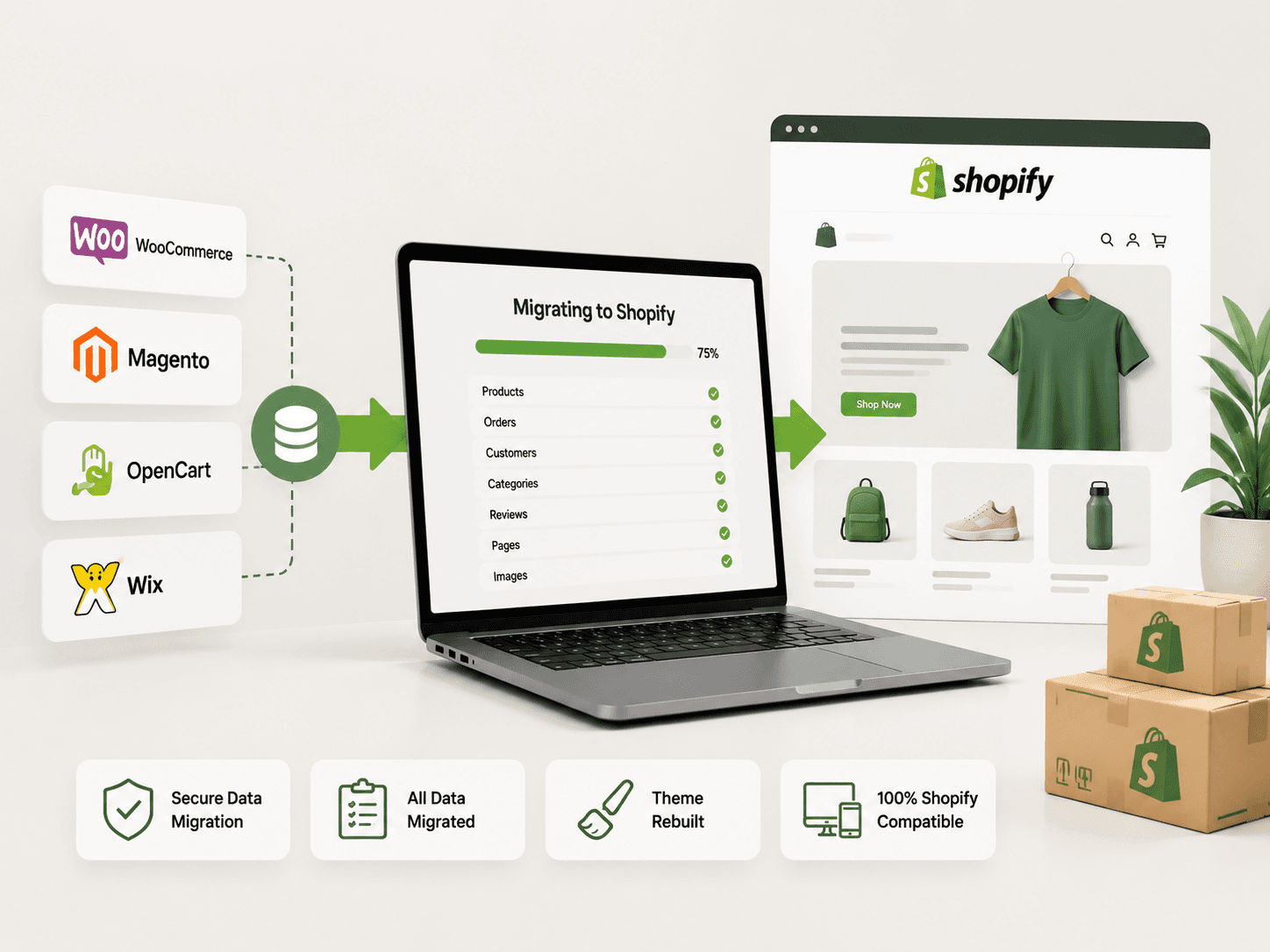
Moving off WooCommerce, Wix, a bespoke PHP site, or a marketplace-only presence without losing search equity.
- chevron_right
Catalogue normalisation before import — duplicate SKUs and unit chaos resolved
- chevron_right
Complete 301 map including legacy category, tag, and paginated URLs
- chevron_right
Order, customer, and refund history imported as records for continuous reporting
- chevron_right
Post-cutover Search Console monitoring through the first indexing cycle
Core Web Vitals Engineering
Speed work measured on throttled mobile against field data, not on a desktop lab score screenshot.
- chevron_right
Image budgets and responsive sizing for photography-heavy textile catalogues
- chevron_right
Render-blocking third-party tags deferred, duplicated pixels removed
- chevron_right
Liquid loops over large collections refactored to stop server-side stalls
- chevron_right
App audit that quantifies what each subscription costs you in milliseconds
Integrations & Data Plumbing
The connections that decide whether the back office keeps up with the storefront.
- chevron_right
Razorpay alongside Shopify Payments, with webhook handling that survives retries
- chevron_right
Zoho Books and Inventory sync so orders, refunds, and payouts post themselves
- chevron_right
Courier aggregator hooks writing AWB numbers and tracking back to the order
- chevron_right
GST-correct tax configuration including HSN codes on the invoice document

The data problems that break Kannur catalogues on Shopify
Almost every failed build we are called in to rescue failed at the data model, not the design. Kannur trades in goods that resist tidy unit-count catalogues, and the modelling decisions made in week one determine what the store can do in year three.
Textile variant matrices that exceed the limit
Weave, count, width, colourway and length multiply fast. We split the matrix between real variants, metafields, and line-item properties so the catalogue stops fighting the platform.
Goods sold by metre, sheet, and lorry load
Furnishing fabric, plywood, and timber are not unit-count products. Quantity rules, packaging increments, and volumetric freight logic have to be modelled, not approximated.
Grade taxonomies buyers search by
Cashew grades from W180 to W320, plywood thickness and BWP ratings, yarn counts — these are filterable facets, and building them as plain text kills navigation and internal search.
Batch, harvest, and shelf-life data
Thalassery food brands need best-before and batch fields that appear on the product page and travel to the invoice, not a note pasted into the description.
Provenance and GI attribution
Payyanur pavithra rings and Kannur handloom carry origin claims worth structuring properly — as product schema and metafields that can be surfaced consistently, not as marketing prose.
Bilingual content and Malayalam search
Storefronts serving both local and diaspora buyers need language handling that does not duplicate product records or split the URL structure into an SEO liability.
Moving off what Kannur stores are usually running today
Most migration enquiries we get from the district come from one of four starting points. Each one fails differently, and each one needs a different import strategy.
WooCommerce on shared hosting
Plugin sprawl, unpredictable uptime during traffic spikes, and attribute data stored as free text that will not import cleanly without normalisation.
Wix or a website-builder store
Locked templates, thin URL structures, and no clean export path — the catalogue usually has to be reconstructed rather than migrated.
A bespoke PHP site from a local developer
No documentation, direct database access needed for the export, and legacy URLs in patterns that need a hand-built redirect map.
Marketplace-only selling
No owned customer data at all. The build has to establish first-party data capture from day one, not just replicate the listings.
Performance tuned for how Malabar actually browses
A store that scores well on a developer laptop and stalls on a mid-range Android outside Taliparamba is not a fast store. We optimise against the conditions your buyers are in.
Image weight discipline
Textile and furnishing catalogues are photograph-heavy by nature. Responsive sizing, correct formats, and a per-template weight budget keep the product page loading on a weak connection.
Third-party script audit
Duplicate pixels, abandoned app tags, and chat widgets loading before content. We quantify what each one costs and remove what nobody can justify.
Liquid render cost
Loops iterating over large collections and unbounded metafield lookups stall the server response. Refactoring these often beats any front-end tweak.
Field data, not lab scores
We work from Search Console Core Web Vitals for stores with real traffic, so improvements are measured on your actual visitors rather than a synthetic run.
How a Kannur build runs, stage by stage
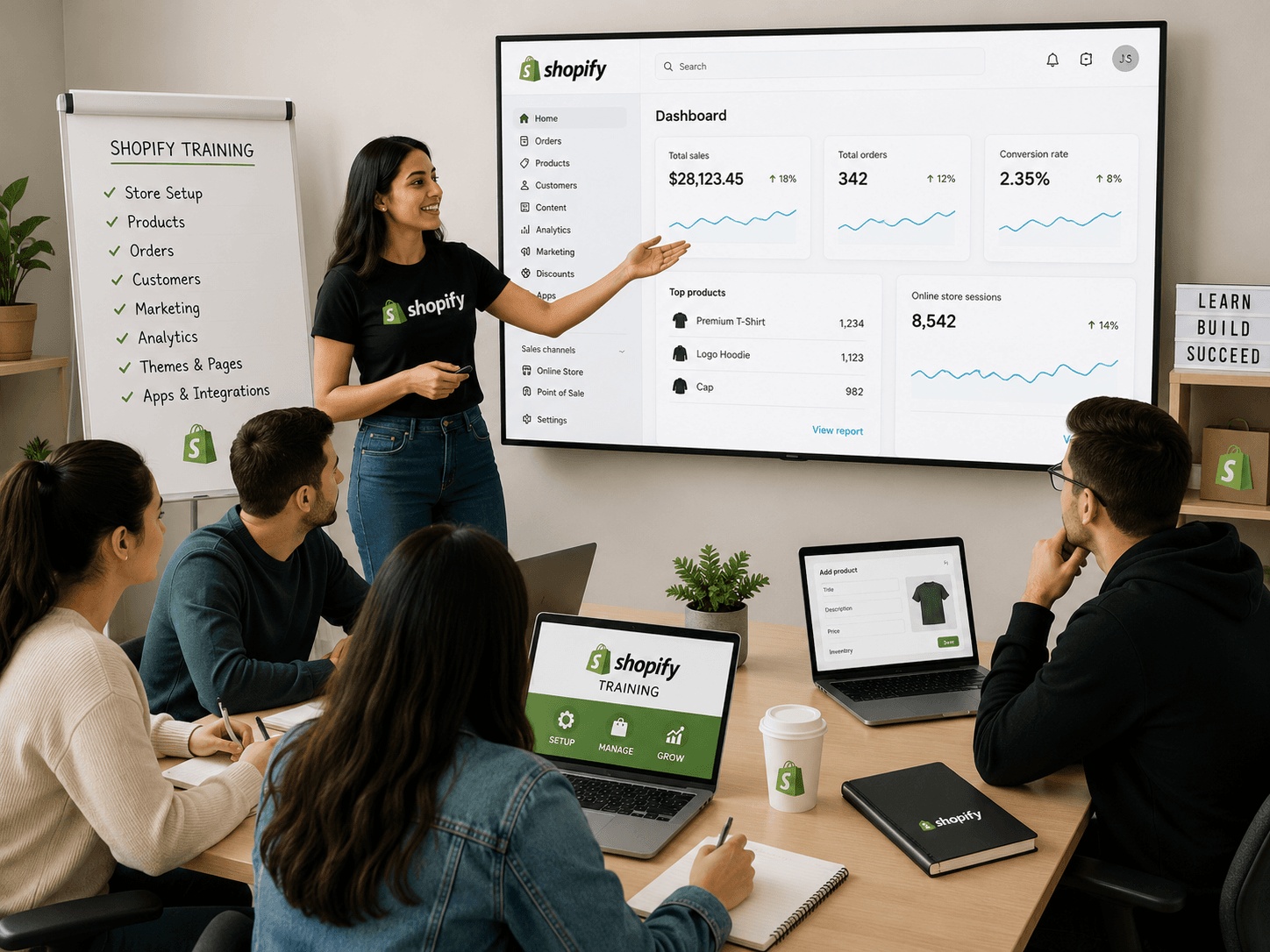
Six stages, each with something you can review before the next begins. No stage is a black box where work happens and you find out at the end.
Technical discovery
We read your current store's code and data before quoting — theme fork drift, app script inventory, catalogue shape, and integration surface. You get a written findings note regardless of whether we proceed.
Data modelling
Metafield definitions, taxonomy, variant strategy, and template map are agreed in writing. This is the stage that decides whether the store is still maintainable in three years.
Build in a development store
Everything is built and reviewed on a partner development store. Nothing experimental touches your live storefront during trading hours.
Data load and QA
Catalogue import, redirect staging, payment and tax testing across UPI, cards, and COD, and device testing on mid-range Android over throttled mobile.
Cutover
DNS and redirect switch scheduled in your quietest window, with Search Console, error logs, and checkout monitored actively through the first days.
Handover
Repository access, architecture documentation, integration credentials, and a recorded walkthrough. Your team can operate the store without us on retainer.
Technical questions we get from Kannur store owners
codeDo you build custom Liquid themes, or start from a purchased template?
expand_more
codeOur handloom range has weave, count, width and colour. Shopify's variant limit keeps blocking us. What do you do?
expand_more
codeCan you build dealer pricing into the store without a monthly wholesale app subscription?
expand_more
codeWe are on WooCommerce with about nine thousand SKUs. How does the migration actually run?
expand_more
codeHow do you measure page speed for a store whose customers are on rural Malabar 4G?
expand_more
codeWill you work with our existing marketing agency, or do you need to own everything?
expand_more
codeWhat do you hand over at the end of a build?
expand_more
codeCan you fix a store somebody else built rather than rebuilding it from scratch?
expand_more
Scope a single piece of work instead of a whole build
Shopify Theme Development
Online Store 2.0 themes in Liquid with a section architecture your marketing team can rearrange without touching code.
Custom Shopify App Development
Private apps on the Admin and Storefront GraphQL APIs, Shopify Functions, and checkout extensions for logic the app store cannot cover.
Shopify Migration Services
Replatforming from WooCommerce, Magento, Wix, or a custom build, with redirect mapping that protects existing rankings.
Shopify Speed Optimisation
Core Web Vitals diagnosed against field data and fixed at the theme, app, and image layer rather than papered over.
Shopify Development in Kerala
How our development engagements run across the state, including the other districts our in-house team builds for.
Shopify Partner in Kannur
The ongoing side: store ownership, Gulf-facing checkout, dealer channels, and growth work for Kannur brands that want a long-term partner.
The other Kerala districts we work in
Kannur is one of fourteen districts our development team builds for. The engineering brief shifts with the trade in each one, so each page covers what that district actually asks us to build.
Send us the catalogue that keeps breaking your store
Share a product export and a link to your current site. We will come back with a technical read on the data model, the theme, and the app stack — and an honest view of whether you need a rebuild or three weeks of fixes.