Shopify Theme Development
A storefront your merchandisers can change without opening a support ticket.
- check_circle
Online Store 2.0 themes built in Liquid from Dawn, not a repurposed template
- check_circle
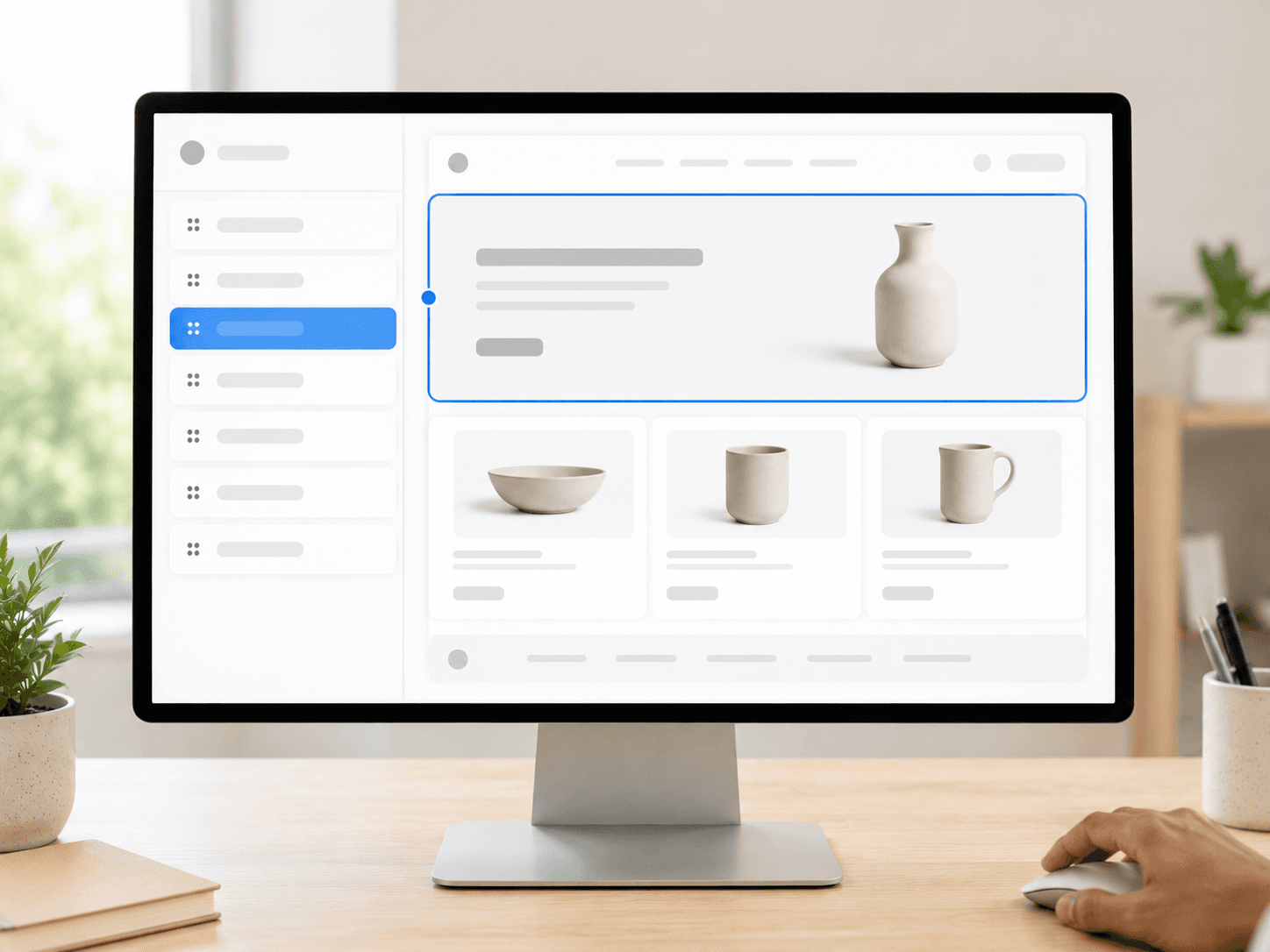
Section and block architecture your team controls from the theme editor
- check_circle
Metafields and metaobjects for product content that does not fit a text box
Online Store 2.0
Sections Everywhere
Built From Dawn
Shopify's Reference Theme
Code Is Yours
Delivered In Your Repository
3–5 Weeks
Typical Theme Build
Why most Shopify themes stop working after six months
A premium theme looks right on day one. The trouble starts when marketing wants a new landing section, and the answer is that it has to be hardcoded — because the theme was built as fixed templates rather than editable sections. Every change becomes a developer request, and the store slowly stops reflecting how you actually sell.
Hardcoded layouts
Content baked into templates instead of sections, so any change to a homepage or landing page needs a developer and a deployment.
Apps used as scaffolding
Four page-builder and section apps installed to work around theme limitations, each adding scripts that slow every page down.
Product content that does not fit
Specs, size guides, and care instructions crammed into the description field as raw HTML, because no structured field exists for them.
Updates that overwrite work
Customisations made directly in a purchased theme, so the next theme update either breaks them or has to be skipped entirely.
What we build into a theme
The goal is a theme your team operates, not one they submit requests against. That is an architecture decision made at the start, not a feature added later.
Section and block architecture
Every page composed from sections your merchandisers can add, reorder, and configure in the theme editor without touching code.
Metafields and metaobjects
Structured fields for specs, size guides, ingredients, and care instructions — so product content is data rather than pasted HTML.
Responsive and tested
Built mobile-first and checked on real devices, not just resized in a browser window.
Accessibility built in
Semantic markup, keyboard navigation, and colour contrast handled during the build rather than retrofitted after a complaint.
Performance-aware from the start
Lean Liquid, deferred scripts, and correctly sized images — because speed is far cheaper to build in than to fix later.
Documentation and handover
A written guide to how the theme is structured and which section does what, so the next person is not reverse-engineering it.
What changes with a properly built theme
Before
- close
Every homepage change is a developer request
- close
Page-builder apps loading scripts on every page
- close
Product specs pasted as HTML into the description field
- close
Theme updates skipped because they break customisations
- close
Nobody documented why the theme is built the way it is
After
- check_circle
Marketing builds landing pages from existing sections
- check_circle
Sections native to the theme, no builder apps needed
- check_circle
Structured metafields rendering specs consistently
- check_circle
Customisations kept separate and update-safe
- check_circle
A written guide to the theme your team can follow
How we build a theme
Content modelling
We work out what your products actually need to communicate, then design the section and metafield structure around that — before any visual design work begins.
Design and build
Theme built in Liquid from Dawn, section by section, on a staging theme in your own store so you can watch it take shape.
Merchandiser testing
Your team builds a page with the sections before launch. If something is awkward to use, we would rather find out now than after handover.
Launch and document
Published with a written guide to the theme structure, plus a walkthrough session so the people using it daily know how it works.
Shopify theme development questions
Should we buy a premium theme or build a custom one?expand_more
If a well-built premium theme is close to what you need, customising it is usually faster and cheaper, and we will say so. A custom build makes sense when your merchandising does not fit an off-the-shelf structure, when you need section types no theme provides, or when you have been fighting a purchased theme's limitations for a while.
What is Online Store 2.0 and does it matter?expand_more
It is Shopify's theme architecture that allows sections on every page rather than only the homepage, along with app blocks and metafield support. It matters because it is the difference between a store your team can edit and one where every change is a developer request. Any theme we build or modernise uses it.
Can you customise the theme we already have?expand_more
Yes. We audit what is there first — if the existing theme is well built and only needs extension, that is far cheaper than a rebuild. If it is a heavily modified purchased theme that breaks on every update, we will explain why a rebuild is likely to cost less over a year.
Will theme updates break our customisations?expand_more
Not if the work is structured properly. We keep customisations in separate section and snippet files rather than editing core theme files directly, and everything lives in a Git repository so changes are reviewable. That is what makes a purchased theme safely updatable.
Can our team edit the theme after handover?expand_more
That is the point of building it this way. Sections are configurable from the Shopify theme editor, so adding a new landing page or reordering a homepage is a task for your marketing team, not a development ticket. We hand over written documentation and run a walkthrough.
Do we own the theme code?expand_more
Yes. It is delivered into your own Git repository and installed on your own Shopify store, documented. There is no licence to renew and nothing preventing another developer from working on it later.
Theme development is one part of what we do
A theme build often sits alongside custom app work or a performance pass. See the full picture, or read about the pieces next to this one.
Also see: Custom Shopify app development · Shopify speed optimisation