Shopify Partner in Kollam for Your Ecommerce Store
This district processes cashew for the whole country and owns almost none of the brands. Building one is a real opportunity and a real operational commitment.
- check_circle
Own-label positioning that does not jeopardise your contract volume
- check_circle
Cold-chain lanes verified before seafood delivery is ever offered
- check_circle
Ashtamudi visitors captured as customers who reorder for years
- check_circle
Honest unit economics before you commit to building a brand
Only need the build — grade catalogues, buyer portals, cold-chain rules? See Shopify development in Kollam.
Positioning First
Brand built without threatening contracts
Verified Lanes
Perishables shipped only where they survive
Visitor Capture
One-time buyers turned into reorders
Unit Economics
Checked honestly before anything is built
Five realities of building a brand when you are a manufacturer
Kollam makes excellent product and captures a fraction of what it eventually sells for. Closing that gap is possible, and it is a genuinely different business rather than an extension of the one you run.
The Uncomfortable Question
If your own brand succeeds, does it compete with the customers whose contracts currently pay your wages? Answering that honestly comes before anything else.
You make the product and somebody else owns the customer
Contract processing is a good business with a ceiling. The brand on the packet captures the margin and the relationship, and no amount of processing excellence changes that.
Export capability does not equal retail capability
Shipping containers and shipping parcels are entirely different operations. Businesses that assume the second follows from the first are usually surprised by the cost of the difference.
Cold chain is where seafood retail lives or dies
One spoiled delivery costs more than the order — it costs the review and the reorder. Selling perishables without lane restrictions is a decision to lose money slowly.
Visitors buy once and disappear
Ashtamudi and the coast bring buyers with a genuine reason to reorder. Almost nobody captures them, and the relationship ends at the shop door.
Nobody owns the brand after the launch
An own-label brand is not a project with an end date. Where nobody internally carries it forward, it becomes a store with fifteen orders and a domain renewal.
Kollam businesses we partner with, and the honest first step for each
A cashew processor and a Punalur timber supplier both want direct revenue, and the shortest path there is entirely different for each of them.
Cashew Processors Going Own-Label
The processing capital of India, mostly packing product that carries somebody else's name.
- check_circle
Positioning that does not put you in conflict with contract customers
- check_circle
Grade transparency and freshness used instead of competing on price
- check_circle
Consumer pack formats and label compliance worked out before launch
- check_circle
Honest unit economics before you commit to a brand build
Seafood & Ready-to-Cook
Export capability meeting a domestic market that has genuinely learned to buy seafood online.
- check_circle
Delivery lanes restricted to where the cold chain actually holds
- check_circle
Packaging cost priced into the order rather than quietly absorbed
- check_circle
Species, cut and count communicated the way home cooks understand
- check_circle
Dispatch days matched to processing rather than promised daily
Coir Units & Home Products
A long-established Kollam trade with almost no branded presence online.
- check_circle
Dimensional and made-to-size ordering handled properly
- check_circle
Retail formats separated cleanly from trade and export quantities
- check_circle
Custom orders routed to quotation instead of an inaccurate cart price
- check_circle
Sustainability credentials presented as data rather than a slogan
Ashtamudi & Backwater Tourism Retail
Visitor-facing outlets meeting buyers who could reorder from anywhere for years.
- check_circle
Capture at the counter that ties a visitor to a store account
- check_circle
Ship-home ordering for buyers who cannot carry the purchase
- check_circle
Follow-up written for someone who has already tried the product
- check_circle
Simple international reorder for overseas guests
Punalur Timber & Plywood Trade
Established suppliers whose dealer ordering still runs entirely on phone calls.
- check_circle
Dealer accounts with agreed rates and reorder from history
- check_circle
Grade, thickness and size grids matching how the trade buys
- check_circle
Freight quoted manually on consignments rather than calculated
- check_circle
Order records captured properly instead of noted on paper
Chinnakada & Town Retail
City-centre retailers with steady local custom and no online channel to speak of.
- check_circle
Local delivery alongside courier for the wider market
- check_circle
Existing customers moved onto lists you actually own
- check_circle
A catalogue built once and reused across store and social selling
- check_circle
Staff able to handle daily orders without outside help
Serving a household and a trade buyer from one business
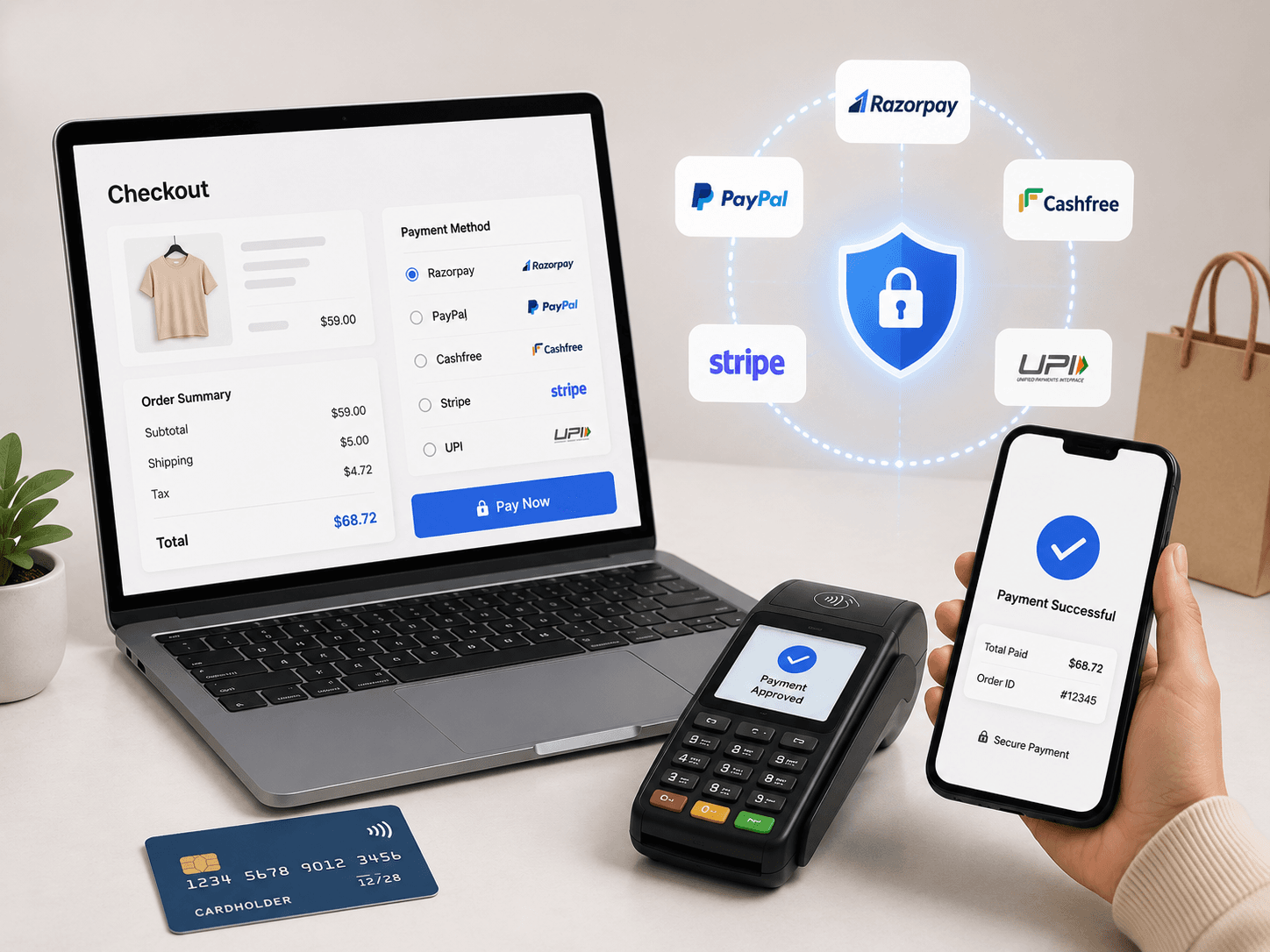
Consumers pay instantly by UPI; trade buyers expect terms and an invoice. Most Kollam businesses moving into retail configure for one and inadvertently exclude the other.
- check_circle
UPI configured as the default rail and tested on the apps buyers use here
- check_circle
Razorpay alongside Shopify Payments so cards and netbanking clear reliably
- check_circle
Prepaid encouraged on perishables where a refusal means the goods are lost
- check_circle
COD limited to lanes where returns data shows it is not costing you
- check_circle
Subscription and reorder billing for staples households buy monthly
- check_circle
Dealer and trade accounts invoiced on terms rather than card checkout
- check_circle
Multi-currency display for overseas visitors reordering after a trip
- check_circle
Settlements, gateway fees and refunds reconciled into your books monthly
The rules that keep perishable retail from becoming refund work
Seafood and fresh product punish carelessness immediately. These constraints look restrictive on paper and are the reason the business stays profitable.
- local_shipping
Cold-chain lanes verified before they are offered at checkout
- local_shipping
Dispatch days aligned to your processing and packing schedule
- local_shipping
Cut-off times matched to when carriers actually collect from the unit
- local_shipping
Packaging tiers priced as real cost rather than absorbed into margin
- local_shipping
Serviceability shown at the product page before a buyer commits
- local_shipping
Collection from the unit or town office offered where it suits buyers
- local_shipping
Consignment and bulk freight quoted manually rather than calculated
- local_shipping
Spoilage claim evidence captured at dispatch so disputes are winnable
The point of own-label is owning things. Including this.
You are building a brand precisely so the customer relationship belongs to you rather than to whoever puts their name on the packet. That logic applies to your agency too.
- lock_open
Shopify account and domain registered in your company name
- lock_open
Theme code in a repository you own with our contributions documented
- lock_open
Customer and subscriber data exportable by you at any time
- lock_open
Apps installed under your account so recurring charges remain visible
- lock_open
Payment and courier credentials held in your own accounts
- lock_open
Brand assets, packaging artwork and photography owned outright by you
- lock_open
A handover document maintained throughout rather than written at the end
- lock_open
Exit on notice with access removed and your next team properly briefed
Three entry points for a Kollam business
Own-Label Feasibility
For processors weighing whether to launch a brand at all
- check_circle
Positioning worked through against your contract relationships
- check_circle
The operational gap between manufacturing and retail mapped out
- check_circle
Unit economics modelled before any commitment is made
- check_circle
A straight recommendation, including not to proceed
Brand Launch & Retainer
For businesses that have decided and want it done properly
- check_circle
Store, packing workflow and customer service set up together
- check_circle
Cold-chain or shipping constraints configured before launch
- check_circle
Monthly improvement work measured on repeat rate
- check_circle
Reporting on contribution rather than headline revenue
Trade Channel Digitisation
For suppliers whose dealer orders arrive by phone
- check_circle
Dealer accounts with agreed rates and reorder from history
- check_circle
Quotation path for consignments needing manual freight
- check_circle
GSTIN and purchase order captured before dispatch
- check_circle
Often a faster return than any consumer brand build
Where Our Kollam Clients Are
Across the district
What processors here ask before committing
helpWe process cashew for national brands. Should we launch our own?
expand_more
helpWhat does going own-label actually require that we do not already have?
expand_more
helpOur seafood side is entirely export. Is there a domestic retail business in it?
expand_more
helpAshtamudi brings visitors who buy from us once. Can we keep them?
expand_more
helpCoir and cashew in one company. Should they share a store?
expand_more
helpHow do we compete with the big cashew brands on price?
expand_more
helpWho runs the store day to day if we take this on?
expand_more
helpHow long before an own-label brand contributes meaningfully?
expand_more
Related pages for Kollam businesses
Shopify Development in Kollam
The build side: grade catalogues, private-label buyer portals, cold-chain rules and export data capture.
Shopify Partner in Kerala
How our ongoing engagements run statewide and what a monthly retainer covers.
Razorpay Integration in Kerala
Consumer and trade payment handling, subscription billing and settlement reconciliation.
Zoho Books in Kerala
Contract manufacturing income and own-brand retail revenue kept clear in one ledger.
Digital Marketing Services
Building recognition for a new consumer brand in a category dominated by national names.
Talk to Our Team
A short call about your contract mix, your capacity and whether own-label makes sense for you.
The other Kerala districts we work in
Kollam is one of fourteen districts we run partner engagements in. Each has its own trades, payment habits and delivery realities, so each page describes the work as it actually happens there.
Whose name is on the product you make?
If the answer is somebody else's, there is a conversation worth having about whether that should change — and an honest one about whether it should not.