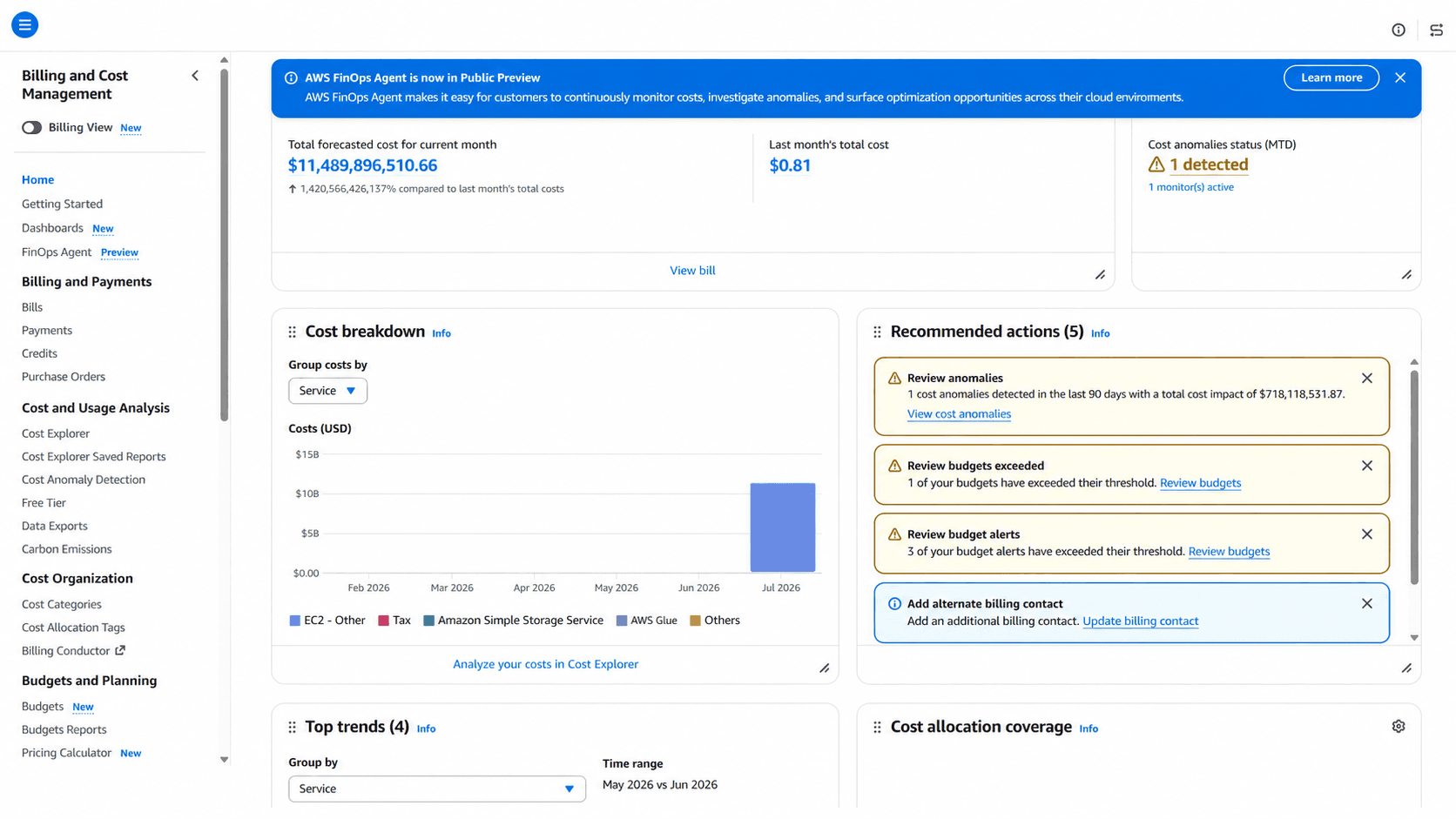
You open your AWS billing console on a Friday morning. Your usual monthly bill: $4.72. The number staring back at you: $1,500,000,000,000.
That's $1.5 trillion. More than Amazon's own market capitalization. More than the GDP of Australia. And it's sitting in your Cost Explorer dashboard like it belongs there.
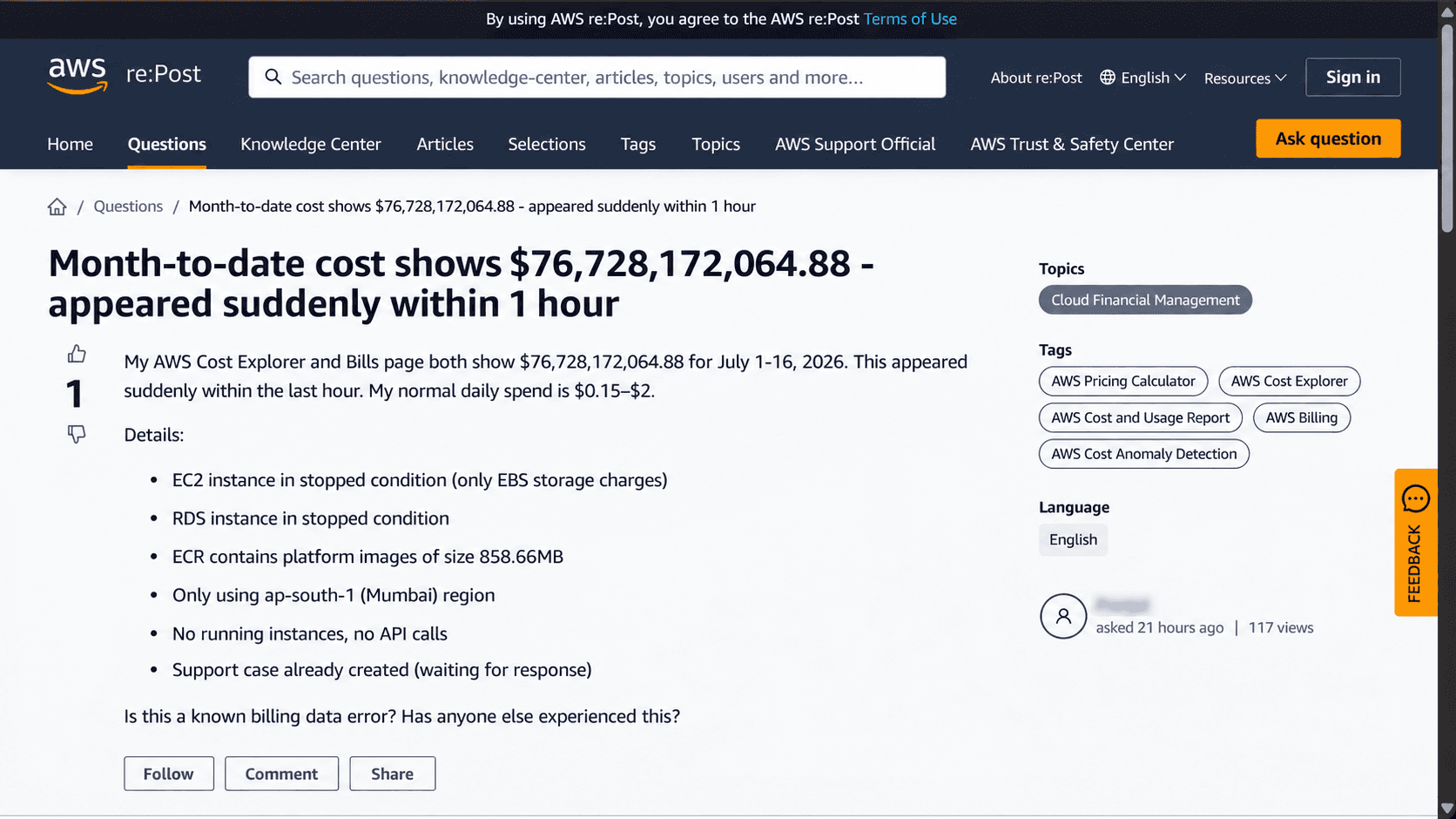
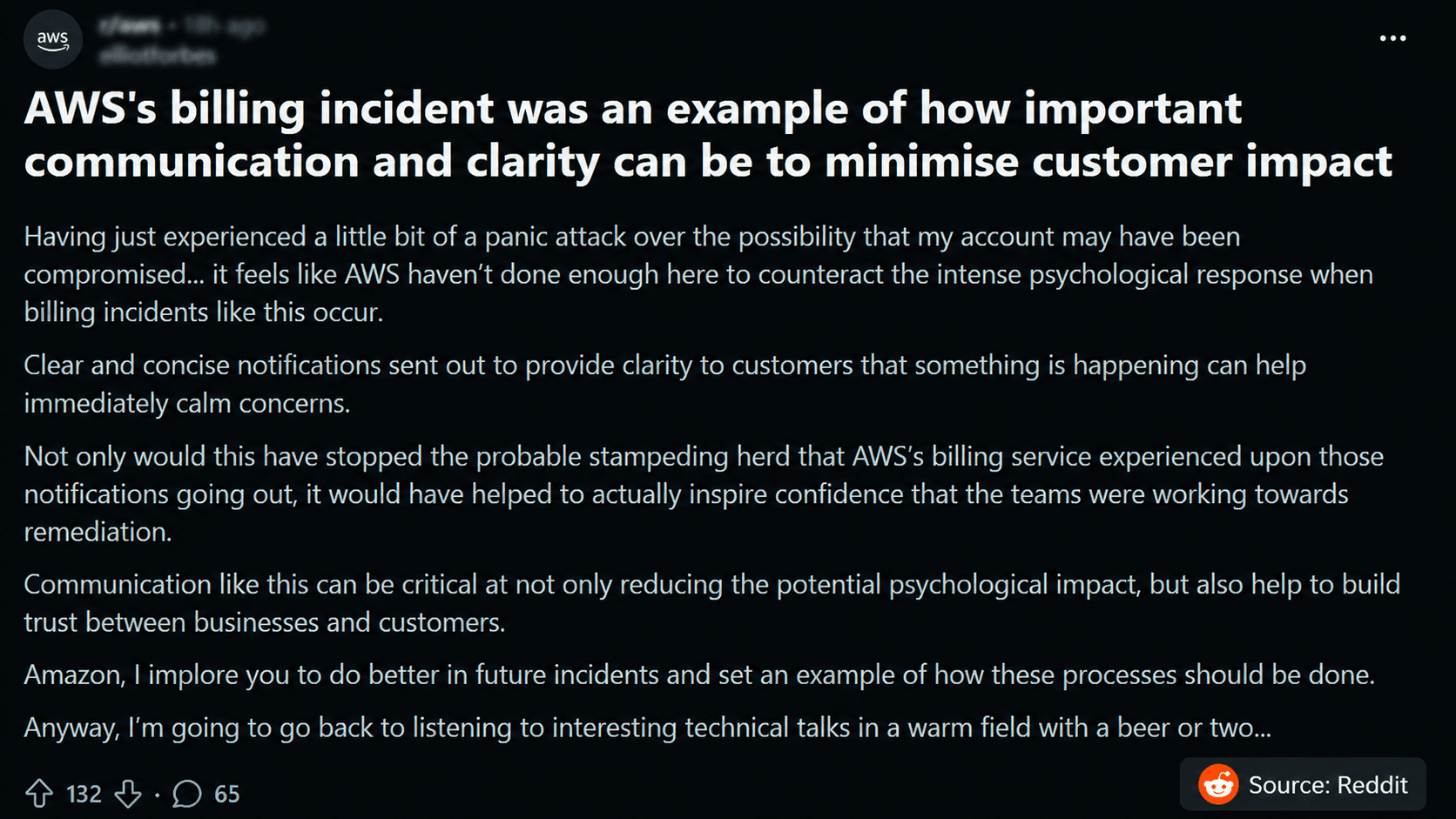
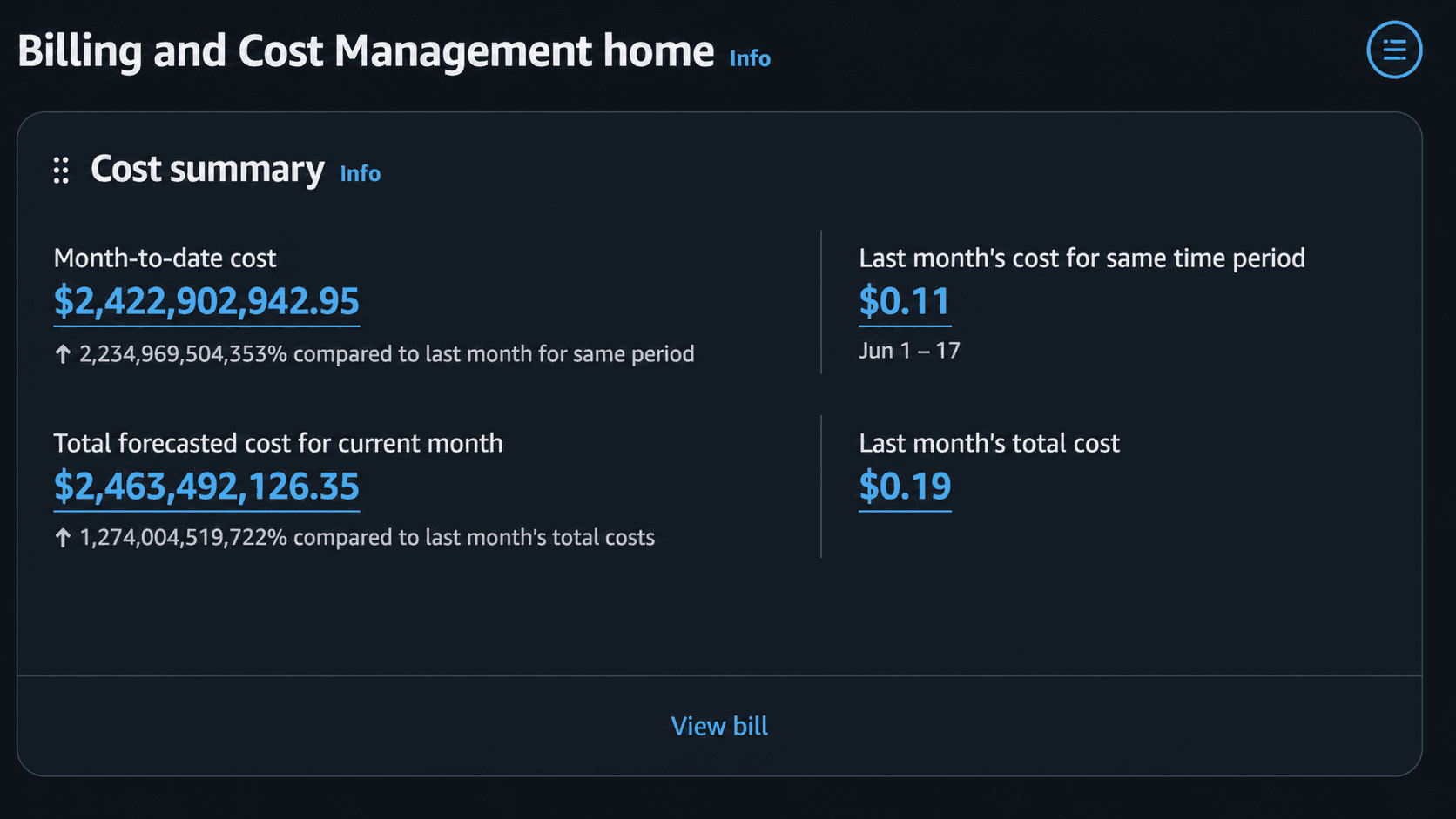
On the evening of July 16, 2026, a bug in AWS's Cost Explorer tool began injecting wildly inaccurate estimated billing projections into customer dashboards worldwide. One widely reported case showed a $1.5 trillion estimate. A UK charity that normally pays under £1 per month saw £5.8 billion. A Reddit user whose account had never exceeded $0.19 was shown $2.5 billion.
Nobody was actually charged. But the panic was immediate, the confusion was global, and the story of what happened — and what it means — is worth understanding.
What Actually Happened — A Timeline
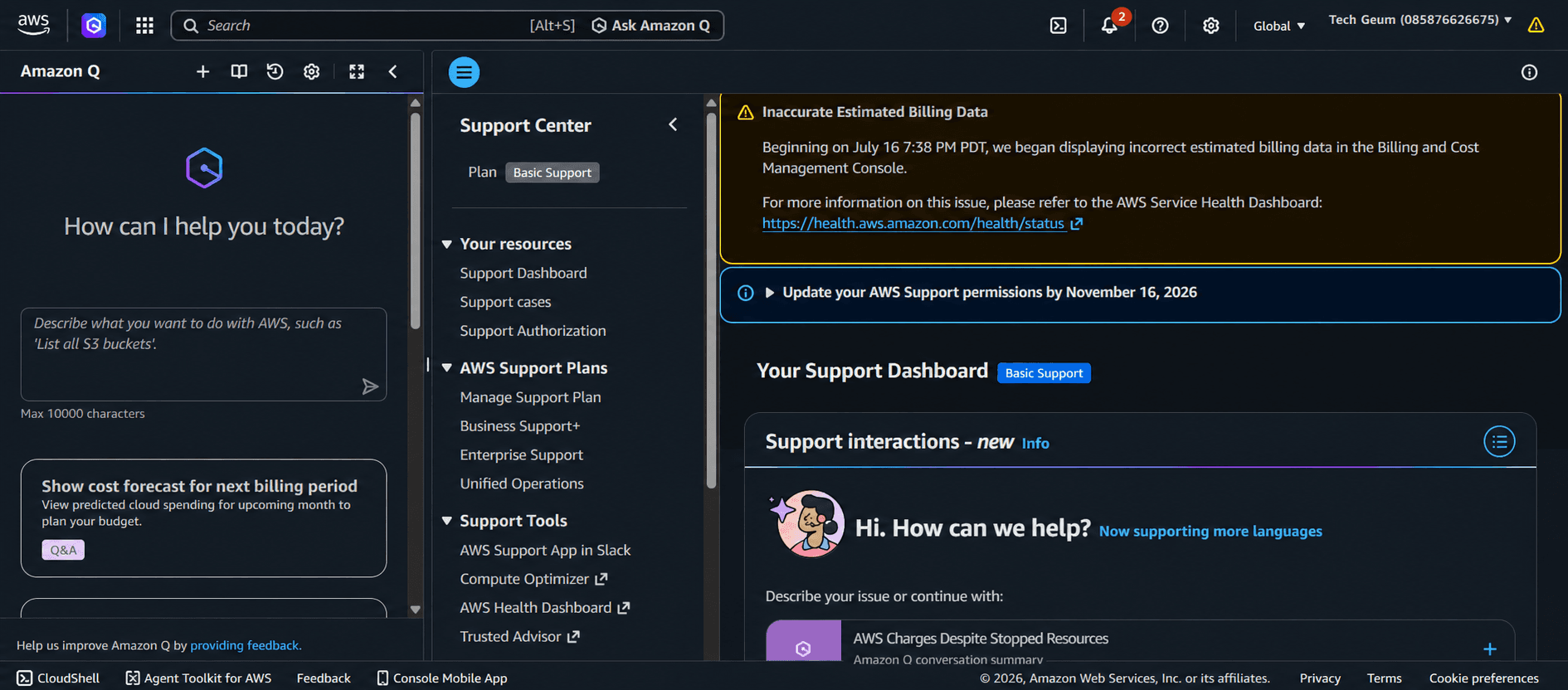
The AWS billing console error in 2026 unfolded over roughly 18 hours. Here's the sequence:
Bug introduced
Incorrect unit pricing deployed to estimated billing computation subsystem
Customers notice
Reports flood Reddit and X as projected bills show billions and trillions
AWS investigates
Root cause identified within 90 minutes of investigation start
Rollback fails
Initial rollback of the recent change does not resolve the issue
Estimation paused
AWS disables estimated bill updates and begins full recomputation
Target resolution
Corrected billing estimates expected to appear for all customers
The Numbers That Broke the Internet
The scale of the display error was staggering. Here are some of the confirmed reported figures:
Highest screenshot reported on Reddit
Shown to a user whose real bill was $0.19
Projected charge for a UK charity paying <£1/month
Month-over-month “growth” shown in one console
“My soul left my body.”
— AWS customer on Reddit, upon seeing their billing dashboard
One user reported panicking and destroying their entire AWS account before realizing it was a display error. Another wrote that their two S3 buckets containing a few megabytes of data had generated a “half-billion-dollar forecast.”
Why Did the AWS Cost Explorer Bug Happen?
AWS traced the root cause to what they described as “an issue with unit pricing within the estimated billing computation subsystem.” In practical terms: a rate multiplier used to project future charges was corrupted, and when applied to real usage data, it produced absurd figures.
Think of it like a speedometer malfunction. Your car is doing 60 mph, but the display reads 50,000. The engine, brakes, and transmission are unaffected. Only the instrument is lying.
The critical architectural detail: AWS's actual billing pipeline — the system that generates real invoices, processes payments, and meters usage — runs separately from the estimation/forecasting layer. The bug lived entirely in the forecasting layer. No real charges were affected.
Why did the initial rollback fail? When AWS attempted to revert the offending change on Friday morning, it didn't resolve the issue. This typically indicates that corrupted data had already propagated into downstream caches and computation stores. Rolling back the code doesn't fix data that's already been written with the bad multiplier.
AWS ultimately had to pause the entire estimation system and recompute all billing data from scratch — a multi-hour operation affecting every customer account.
Was Anyone Actually Charged?
No. Real billing was never affected.
AWS confirmed: “The displayed billing estimates do not reflect actual usage and charges.” Amazon spokesperson Aisha Johnson stated that no customer was billed for the phantom amounts.
Your actual invoices, the Bills section of your console, and your Cost and Usage Reports all remained accurate throughout the incident. If you check those sources, you'll see your real charges unchanged.
But the real harm wasn't financial — it was operational. Teams panicked. Some assumed a security breach and began rotating access keys. At least one user destroyed their account entirely. Budget automations and internal alerting systems may have triggered shutdowns based on the faulty estimates. AWS has not confirmed whether any accounts were automatically suspended.
The Ripple Effects Nobody Expected
Even though the estimates were fake, the scramble was real. The AWS estimated billing bug triggered a cascade of unintended consequences:
Security false alarm: Some engineering teams assumed the inflated bills indicated a breach — compromised credentials spinning up resources — and immediately began rotating all access keys and auditing IAM policies.
Third-party tool contamination:FinOps platforms like Broadcom's CloudHealth, which pull data from AWS billing APIs, displayed the same inflated figures — extending the confusion beyond the AWS console itself.
Compounding optics:A separate AWS CloudFront outage had occurred just the day before, serving errors instead of websites. Two incidents in 48 hours fueled a “is AWS falling apart?” narrative across tech media.
Regulatory scrutiny context: This follows separate 2025 AWS outages that disrupted UK financial and governmental services, adding to ongoing questions about cloud provider concentration risk.
What FinOps Teams Should Take From This
A $1.5 trillion estimate should have been auto-flagged as impossible before it ever hit a customer screen. But it wasn't. And that fact carries lessons beyond this specific incident.
Don't rely on a single source of truth for cost data
If your cloud cost monitoring depends entirely on AWS's own forecast numbers, add a second opinion. Independent FinOps tooling with cross-checked anomaly detection catches exactly this scenario.
Set budget alerts on actual spend, not just estimates
AWS Budgets can alert on both forecasted and actual costs. The teams that set alerts only on forecasted costs got phantom fire alarms. Those tracking actual spend saw nothing unusual.
Have a “billing looks insane” playbook
Step one should be “check the AWS Health Dashboard and status page” — not “rotate all keys and destroy accounts.” A 60-second status check would have saved hours of incident response for many teams.
Treat billing dashboards like production systems
The bug accidentally ran a fire drill — and exposed how many teams had no drill plan. Billing dashboards deserve alerting, redundancy, and triage playbooks just like uptime monitors.
This article reflects information confirmed as of July 18, 2026, from AWS's own status communications, TechCrunch, The Guardian, WIRED, The Next Web, Cyber Kendra, and Startup Fortune. No official post-mortem has been published by AWS at time of writing. We will update this article if AWS releases further details.